 ultimate-guide
How to Choose Your First Motorcycle: 2026 Guide
Table of Contents
- Start With a Fitment Checklist, Not a Bike
- Engine Displacement and Power for a First Motorcycle
- Motorcycle Types: Cruiser, Sportbike, Dual-Sport, and Standard
- New vs Used Motorcycle for Beginners: Which Makes Sense?
- Motorcycle Gear Essentials for New Riders
- How Does Motorcycle Financing Affect Credit?
- The Test Sit vs Test Ride Protocol and Your First 90 Days
- Conclusion
- Frequently Asked Questions
Last Updated: September 19, 2026
Start With a Fitment Checklist, Not a Bike
The most common mistake new riders make is falling in love with a motorcycle before checking whether they can control it. Learning how to choose your first motorcycle starts with physical fitment, not engine size or paint color. At Monarch Honda, a 50-year-old authorized powersports dealership, the team has watched hundreds of beginners walk past the right bike because it wasn't the one they pictured.
Seat Height, Flat-Foot, and Handlebar Reach
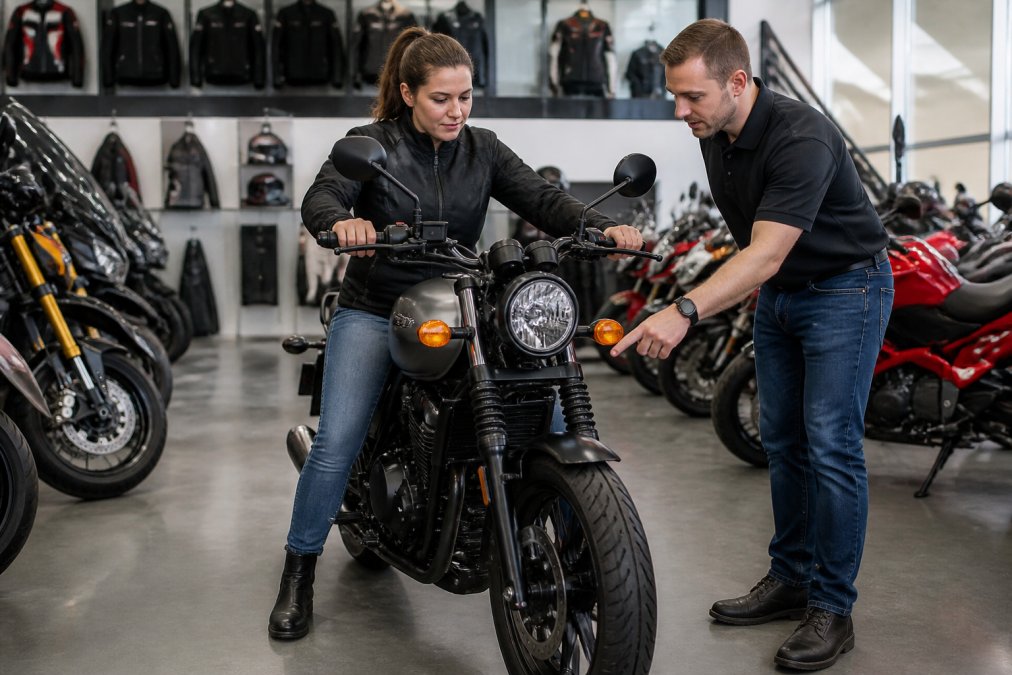
Seat height is the distance from the ground to the lowest point of the saddle, and it determines whether a rider can place both feet down at a stop. Being able to flat-foot the bike, meaning both feet rest fully on the ground, gives new riders confidence at intersections and in parking lots. Handlebar reach matters too: arms should have a slight bend, not be locked straight.
- Both feet flat on the ground at a stop
- Arms slightly bent at the elbows when gripping the bars
- Back upright or with a slight forward lean, never hunched
- Mirrors and controls reachable without shifting in the seat
Curb Weight and Center of Gravity
Curb weight is the motorcycle's weight with all fluids and a full tank of fuel. A lighter bike is easier to pick up, push, and balance at low speeds. Center of gravity matters just as much: a bike with a low, centralized mass feels lighter than its scale weight suggests.
Engine Displacement and Power for a First Motorcycle
A beginner-friendly motorcycle typically has an engine displacement between 250cc and 650cc. Displacement, measured in cc, describes the total volume of the engine's cylinders. More cc generally means more power, but power-to-weight ratio matters more for a new rider.
Throttle Response and Clutch Control
Throttle response is how sharply the engine reacts when the rider twists the grip. A twitchy throttle makes low-speed maneuvering harder. Clutch control, the ability to feather the clutch lever to manage power delivery, is the single most important skill a new rider develops. A braking system with ABS helps prevent wheel lock during hard stops and is worth prioritizing.
Motorcycle Types: Cruiser, Sportbike, Dual-Sport, and Standard
The four main categories suit very different riders. A cruiser has a low seat and relaxed riding posture, comfortable for commuter duty. A sportbike prioritizes speed and sharp handling but demands a forward-leaning posture that strains new wrists. A dual-sport handles pavement and dirt, ideal for trail access. A standard sits in the middle: upright ergonomics, predictable power, and easy maneuverability.
| Type | Seat Height | Riding Posture | Best For |
|---|---|---|---|
| Cruiser | Low | Relaxed, feet forward | Commuting, long rides |
| Sportbike | Higher | Forward lean | Track, spirited riding |
| Dual-sport | Tall | Upright | Trail and street mix |
| Standard | Medium | Upright | All-around beginners |
New vs Used Motorcycle for Beginners: Which Makes Sense?
A used motorcycle often makes more sense for a first bike because new riders drop bikes, and a pre-owned model absorbs that mistake without the sting of a fresh scratch. The used market offers lower entry costs, but it requires a disciplined pre-purchase inspection to catch hidden damage, worn tires, or a stretched chain drive. New bikes come with warranties and no unknown history.
What to Inspect on a Used Motorcycle
A used bike is only a bargain if the expensive wear items are still serviceable. Walk through this checklist in order, and walk away from any bike that fails more than one item.
- Tires: Look for the DOT date code stamped into the sidewall, four digits, week and year. Tires older than about five years should be replaced regardless of tread depth, because rubber hardens and loses grip. Check for flat spots, cracking, and uneven wear.
- Chain and sprockets: A healthy chain moves freely, has no tight spots, and shows no rust. Sprocket teeth should be symmetrical, not hooked or pointed. A worn set is a common hidden cost.
- Brakes: Check pad thickness, rotor condition, and fluid color. Dark or cloudy fluid suggests overdue service.
- Fluids: Engine oil, coolant, and brake fluid should be at the correct level and color. Milky oil can indicate a coolant leak or blown head gasket.
- Frame and forks: Look for scrapes, dents, or mismatched paint suggesting a crash. Check fork tubes for pitting and oil residue.
- Leaks: Inspect under the engine, around the fork seals, and at the shock for fresh drips.
- Cold start: Ask the seller not to warm the bike before you arrive. A cold engine reveals starting problems, smoke, and unusual noises that a warm engine hides.
- Title and history: Confirm the title is clean, matches the frame and engine numbers, and is in the seller's name. A branded title (salvage, rebuilt, flood) reduces value and insurability.
The Test Sit vs Test Ride Protocol
A test sit happens before a test ride, and for many beginners it is the only step they need. Mount the bike with the kickstand down and the engine off, then check:
- Both feet flat on the ground, or at least the balls of both feet
- Arms slightly bent at the elbows when gripping the bars
- Back upright or with a slight forward lean, never hunched
- Mirrors and controls reachable without shifting in the seat
- The bike can be held upright and walked forward a few steps
The Cost Math
A used bike's lower price is real, but it is partly offset by immediate maintenance. A used bike often needs new tires, a chain and sprocket set, and a fluid service within the first few months, costs that can erase much of the savings versus a new bike under warranty. The honest comparison is purchase price plus first-year maintenance versus purchase price plus warranty coverage.
Motorcycle Gear Essentials for New Riders
Motorcycle gear essentials for new riders begin with a full-face helmet, the only helmet style that protects the chin and face in a crash. A riding jacket with abrasion-resistant material, gloves, over-ankle boots, and riding pants round out the basics. Protective gear is not optional; it is the difference between a minor slide and a serious injury.
- Full-face helmet with a DOT or Snell rating
- Riding jacket with armor at shoulders, elbows, and back
- Gloves with knuckle protection and a secure wrist closure
- Over-ankle boots with a reinforced toe and heel
- Riding pants with abrasion-resistant panels
How Does Motorcycle Financing Affect Credit?
Financing is only one line in the real cost of owning a first motorcycle, and most beginner guides stop at the sticker price. What actually determines whether a first bike is affordable is the total cost of ownership: the loan, insurance, gear, maintenance, and the consumables that wear out faster than new riders expect.
What Financing Actually Does to Credit
Motorcycle financing behaves like any installment loan. On-time payments build positive history; missed payments damage the score. Lenders run a hard inquiry when a buyer applies, which can cause a small, temporary dip. A longer loan term lowers the monthly payment but increases total interest paid, and because motorcycles depreciate faster than most cars in the first two years, a long term can leave a rider owing more than the bike is worth.
The Ownership Costs Beginners Underestimate
Insurance is the first surprise. Premiums depend on engine displacement, rider experience, bike value, and coverage choices. A full-coverage policy on a new 600cc sportbike can cost several times what liability-only coverage costs on a used 250cc standard, and a lender usually requires full coverage until the loan is paid off. Getting a quote on a specific make and model before buying is the most useful budgeting step a beginner can take.
- Oil and filter: typically every 3,000-5,000 miles, or at least once a season
- Chain: clean and lubricate every 300-600 miles; adjust tension regularly; replace a chain and sprocket set every 15,000-20,000 miles
- Tires: a rear tire on a sportbike may last only 4,000-8,000 miles; a set of quality tires is one of the largest recurring expenses
- Brake pads and fluid: inspect at every service; fluid flushes are usually recommended every two years
- Valve clearance checks: required on many models at set intervals and are labor-intensive
Gear Is a Fixed Cost, Not an Optional One
A full-face helmet, armored jacket, gloves, over-ankle boots, and riding pants are a one-time cost that should be budgeted alongside the bike, not after it. Buying gear first keeps a rider from riding unprotected while saving up.
Motorcycle safety and rider training resources
The Test Sit vs Test Ride Protocol and Your First 90 Days
A test sit happens before a test ride: the rider mounts the bike, checks flat-foot reach, grips the bars, and confirms comfort with the seat height and handlebar reach. Only after a comfortable test sit should a test ride follow, focusing on throttle response, clutch control, and low-speed feel, where beginners struggle most.
| Phase | Focus | Frequency |
|---|---|---|
| First week | Parking lot drills, clutch control | Daily, 20-30 min |
| Weeks 2-4 | Neighborhood and low-traffic roads | 3-4 times weekly |
| Weeks 5-8 | Commuter routes, braking practice | 3-4 times weekly |
| Weeks 9-12 | Highway merges, night riding | 2-3 times weekly |
Conclusion
Choosing a first motorcycle comes down to fitment, power, and honesty about how the bike will actually be used. Riders who start with a fitment checklist and a realistic budget avoid the most expensive beginner mistakes. The right first motorcycle is the one a rider can control confidently from day one, and Monarch Honda's team has spent five decades helping new riders find exactly that.
Frequently Asked Questions
What is a good first motorcycle for a beginner?
A good first motorcycle balances seat height you can flat-foot, manageable curb weight, and predictable throttle response. Engine displacement in the 300cc to 500cc range works well for most new riders. Cruisers, standards, and dual-sports in that range offer upright riding posture and stable maneuverability. Sit on several models before deciding. The right first motorcycle is one you can control confidently at low speeds, not the one with the most power.
Is 600cc too much for a beginner?
A 600cc sportbike engine can be too much for a new rider because of its aggressive power-to-weight ratio and peaky throttle response. However, a 600cc cruiser or standard with a milder tune may be manageable. The deciding factor is not displacement alone but how the power delivers, the bike's dry weight, and your clutch control. Many riders start on 300cc to 500cc machines and move up after a season of practice.
Do I need to take a motorcycle safety course before buying a bike?
Most states require a motorcycle endorsement to ride legally, and completing a Motorcycle Safety Foundation (MSF) course is the most common path to earning it. The course covers clutch control, braking technique, and hazard avoidance in a controlled environment. Many insurance providers offer discounts after you complete an MSF course. Taking the course before you buy helps you understand what riding style suits you and reduces the risk of dropping a brand-new bike.
What should I look for when buying a used motorcycle?
Start with a pre-purchase inspection covering the chain or shaft drive, brake pads, tire tread, and fluid condition. Check the maintenance schedule history and look for signs of crash damage on the frame and forks. Verify the mileage matches the wear on the grips and pegs. Ask whether the bike has been stored indoors. A used motorcycle from a dealership often includes an inspection report.