 how-to
How to Buy a Used Motorcycle Safely: A Step-by-Step Guide
Table of Contents
- Before You Meet the Seller: Pre-Purchase Questions to Ask When Buying a Used Motorcycle
- Verify Ownership and Documentation: Used Motorcycle Title and VIN Check
- The Cold-Start Inspection: Your Used Motorcycle Inspection Checklist
- Buying a Motorcycle from a Private Seller: Safety and Fraud Prevention
- The Test Ride: What to Watch For and How to Stay Safe
- Negotiation, Costs, and Ownership Logistics
- Red Flags: When to Walk Away from a Used Motorcycle
- Frequently Asked Questions
Last Updated: October 15, 2026
Before You Meet the Seller: Pre-Purchase Questions to Ask When Buying a Used Motorcycle
The first step to buy used motorcycle safely starts before you even see the bike. Call the seller and ask direct questions. This filters out problem vehicles and saves time.
Ask why they're selling. Listen carefully to their answer. A rider selling because they bought a different bike is different from someone unloading a damaged machine. Ask how long they've owned it and how often they ride.
Request the service records. Regular maintenance shows the owner cares about the bike. Missing records don't mean the bike is bad, but they make inspection harder. Ask about any modifications. Some upgrades are fine. Others cause problems with reliability or resale value.
Get the VIN (vehicle identification number) before you meet. This lets you run a history check from home. Ask about the title status. Is it clean? Has it been salvaged or branded? A clean title is essential. Ask if there are any liens on the bike.
These conversations take ten minutes. They reveal a lot about the seller and the bike.
Verify Ownership and Documentation: Used Motorcycle Title and VIN Check
Before handing over money, verify that the seller actually owns the motorcycle and that the title is legitimate. This step protects you from buying stolen property or a bike with hidden legal claims.
Request the title document. Look at it in person. The seller's name should match the current owner listed on the title. If it doesn't, walk away. The VIN on the title must match the VIN on the motorcycle.
Run a vehicle history check using the VIN. Free services exist online, though paid reports are more detailed. These reports show accident history, insurance claims, and ownership changes. They flag stolen vehicles and salvage titles.
Check for liens through your state's Department of Motor Vehicles or Secretary of State office. A lien means a lender has a legal claim on the bike. If the seller doesn't pay off the lien before transfer, you inherit the debt.
Verify the title is not suspended or revoked. Contact your state's motorcycle licensing authority if unsure. Some states flag titles for unpaid taxes or traffic violations.
The Cold-Start Inspection: Your Used Motorcycle Inspection Checklist
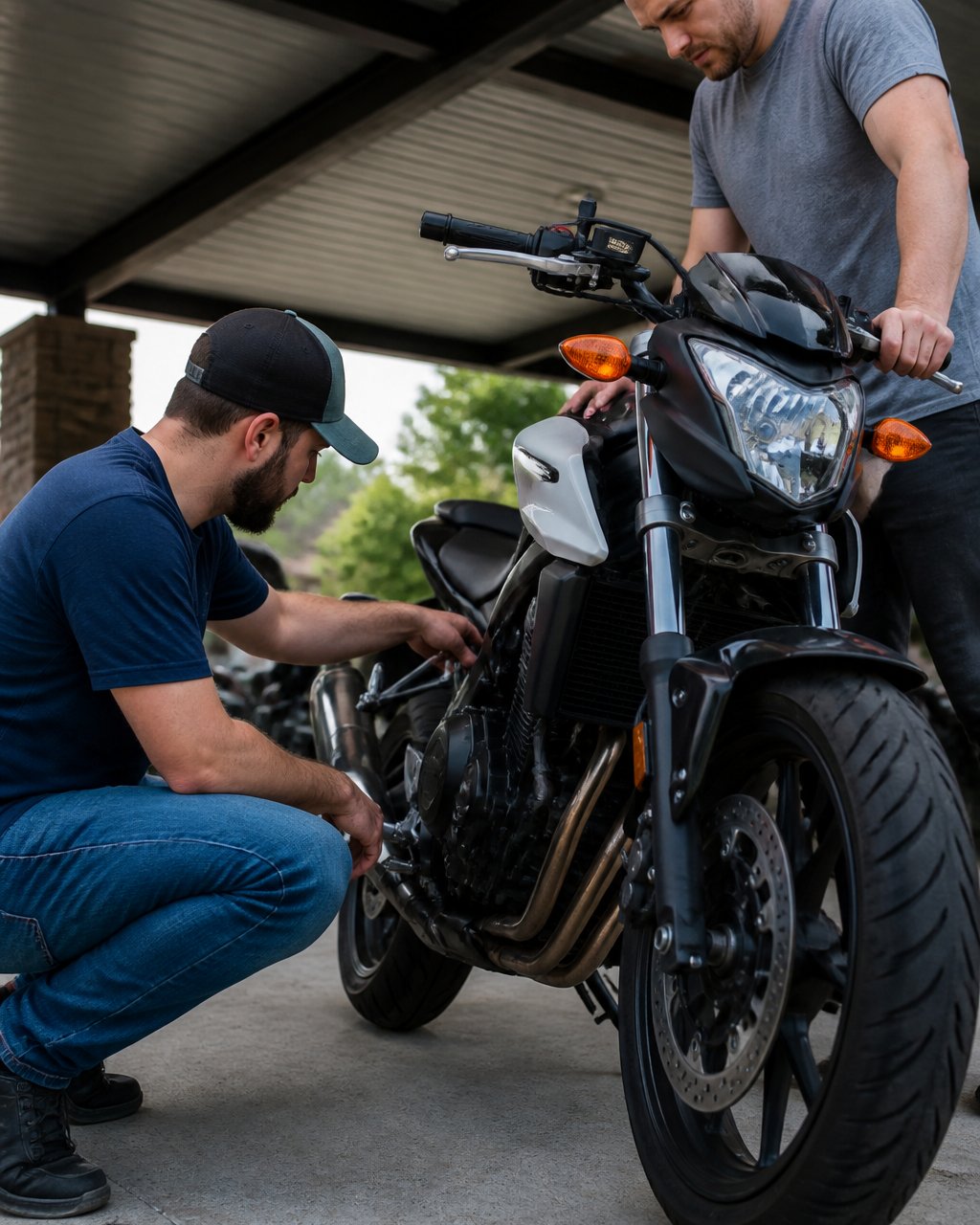
The best time to inspect a used motorcycle is when the engine is cold. A cold engine reveals problems that warm-up hides. Arrive early, before the seller has started the bike for you.
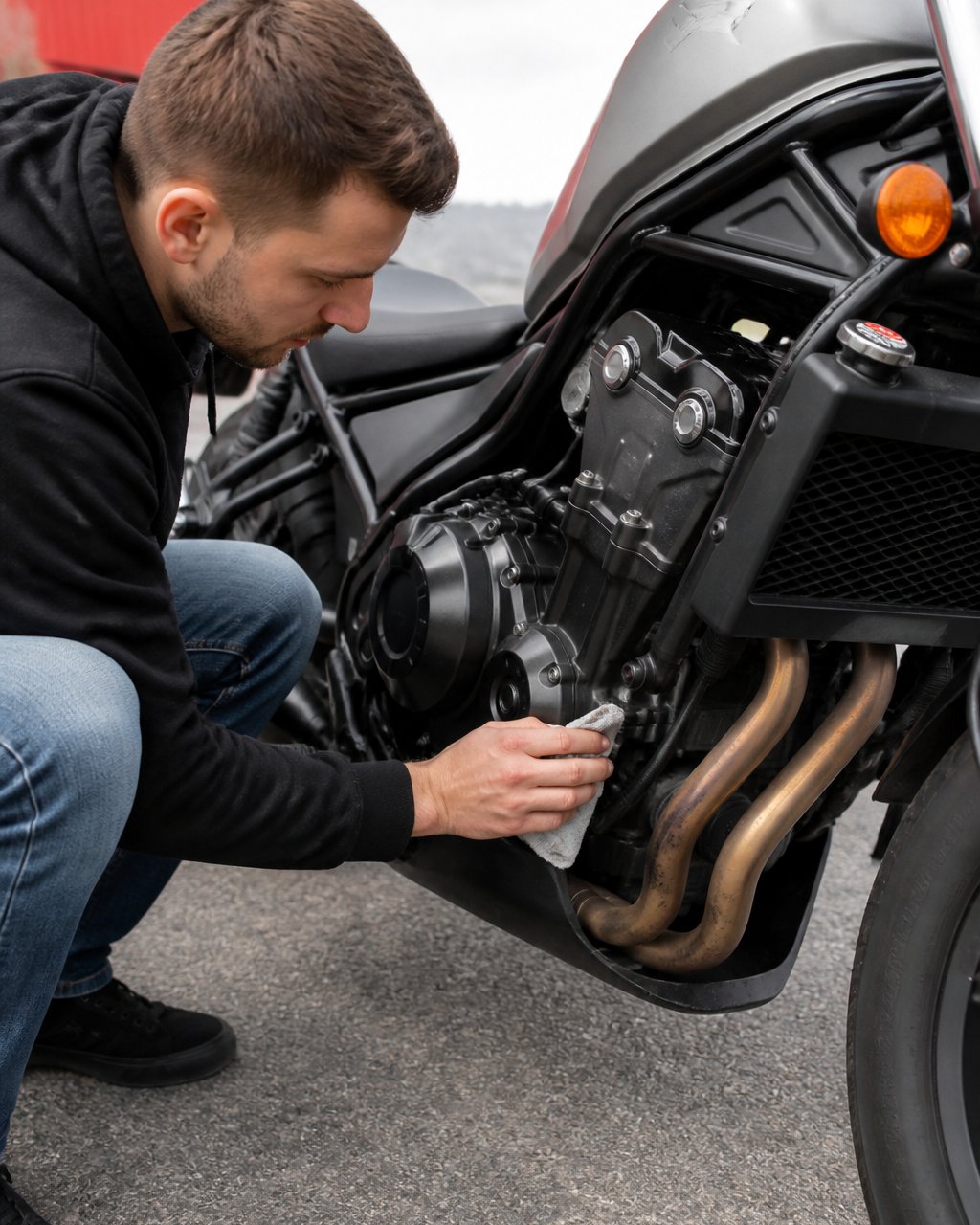
Engine and Mechanical Systems
Start with the engine. Look for oil leaks around the gaskets, seals, and drain plug. A small drip is normal. Puddles or heavy seeping mean expensive repairs ahead. Check the oil level with the dipstick. Dark, thick oil suggests the bike hasn't been serviced regularly.
Inspect the spark plugs. Remove them and look inside. Black, wet plugs mean the engine runs too rich. White, dry plugs suggest lean running. Either extreme points to tuning problems or carburetor issues. The plugs should be tan or light brown.
Listen to the engine when it starts cold. Unusual noises like knocking, pinging, or grinding mean internal damage. Some ticking is normal as the engine warms. Loud clunking is not. Start the bike yourself if possible. Feel how it cranks. Hard cranking suggests a weak battery or starter problems.
Check the coolant level if the bike is liquid-cooled. Green, pink, or blue coolant that's clean is fine. Brown or rusty coolant indicates corrosion inside the cooling system. Smell the coolant. A sweet smell suggests a head gasket leak, which is expensive to fix.
Frame, Suspension, and Bodywork
Look at the frame and bodywork for crash damage. Check both sides. Look for bent tubes, cracked welds, or misaligned panels. Spray-painted sections that don't match the rest of the bike signal recent repair. Tap on suspect areas with your knuckles. A hollow sound suggests filler or repair under the paint.
Inspect the forks and suspension. Push down on the handlebars and front fender. The bike should compress smoothly and bounce back once or twice. Harsh, bouncy suspension or no bounce at all means worn shocks. Look at the fork tubes. Scratches, pitting, or oil weeping mean internal seal failure.
Check the rear suspension the same way. Push down on the seat. Feel for smooth compression and controlled rebound. Clunking or grinding sounds mean worn bearings or damaged linkage.
Look at the steering head bearings. Turn the handlebars fully left and right. They should move smoothly without play or grinding. Rough steering is a sign of worn bearings that need replacement.
Tires, Brakes, and Safety Components
Examine the tires closely. Check the tread depth with a penny. Insert the penny into the groove with Lincoln's head upside down. If you see the top of his head, the tread is too worn.
Look at the tire wear pattern. Uneven wear on one side suggests alignment problems or worn suspension. Wear in the center means the bike ran overinflated. Wear on the edges means underinflated. Check the tire date code on the sidewall.
Inspect the brake pads. Most bikes have a wear line marked on the caliper. Pads at or below the line need replacement. Squeeze the brake lever. It should feel firm and stop the wheel without sponginess.
Check the brake fluid color. It should be clear or slightly amber. Brown or black fluid means it's old and needs flushing. Check the brake hoses for cracks or bulges. Damaged hoses fail without warning.
Look at the lights and electrical components. Turn on the headlight, tail light, and brake lights. All should work. Check the turn signals. Test the horn. Electrical gremlins are annoying and expensive to diagnose.
Buying a Motorcycle from a Private Seller: Safety and Fraud Prevention
Private sales are common, but they carry risks. Protect yourself from fraud and unsafe transactions.
Meet in a public place during daylight. Never meet at an isolated location or after dark. Bring a trusted friend. Tell someone else where you're going and when you expect to return.
Bring cash only if you trust the seller completely. Better yet, arrange a bank transfer or cashier's check. Never hand over cash for a bike you haven't fully inspected and test-ridden.
Verify the seller's identity. Ask for a driver's license and check the name against the title. Take a photo of the ID if possible. Scammers sometimes use fake identities.
Inspect the title in person. Look for signs of alteration. The signature should match. Titles with white-out, erasures, or obvious changes are red flags.
Ask the seller to start the bike and let it warm up while you watch. Listen for unusual sounds. Observe the exhaust smoke. Blue smoke means oil burning. Black smoke means running too rich.
Request a test ride before committing. The seller should allow this. If they refuse, that's suspicious.
The Test Ride: What to Watch For and How to Stay Safe
A test ride reveals how the bike actually handles. Ride it on streets you know, not unfamiliar roads. Start slowly.
Feel the brakes. Squeeze the front brake lever gradually. The bike should stop smoothly without the front wheel locking. Squeeze the rear brake.
Test the acceleration. Roll on the throttle smoothly. The engine should respond without hesitation. Jerky throttle response or hesitation suggests carburetor or fuel injection problems.
Feel the handling. Turn left and right at normal speeds. The bike should turn smoothly without pulling or fighting. Tight or loose steering means suspension or bearing problems.
Listen to the engine during the ride. Knocking, pinging, or grinding noises mean internal damage. A smooth engine sound is what you want.
Check the shifting. Shift through the gears smoothly. The transmission should engage each gear without grinding or slipping. Neutral should be easy to find.
Feel the clutch. It should engage smoothly without slipping or grabbing. A grabby clutch is annoying. A slipping clutch means expensive repair.
Ride for at least fifteen minutes. Short test rides hide problems that show up under load.
Negotiation, Costs, and Ownership Logistics
After the inspection and test ride, you know the bike's condition. Now discuss price.
Research the market value for that make, model, and year. Online pricing guides and local classified ads show what similar bikes sell for. Use this data to negotiate fairly.
Point out any problems you found during inspection. Use these as reasons to negotiate lower. "The tires need replacing, which costs $400.
Agree on a price before you transfer money. Get the agreement in writing if possible. A simple text message or email works. This prevents disputes later.
Understand the costs beyond the purchase price. Registration fees vary by state. Insurance is required in most states. Budget for new tires, brake pads, or other maintenance if needed.
Plan the title transfer carefully. Get the signed title from the seller. Fill out your state's transfer form. Submit both to your DMV along with the bill of sale.
Get insurance before you ride the bike home. Most states require proof of insurance before registration. Call an insurance agent and get a quote.
Red Flags: When to Walk Away from a Used Motorcycle
Some bikes aren't worth buying at any price. Learn to recognize the warning signs.
Walk away if the seller won't let you inspect the bike thoroughly or take a test ride.
Walk away if the VIN doesn't match the title or frame. This signals fraud or a stolen bike. Don't take the risk.
Walk away if the title is salvage, branded, or shows signs of alteration. Salvage bikes are legal but hard to resell.
Walk away if there are active liens on the title. The seller must pay these off before transfer.
Walk away if the engine has major damage. Blue smoke, hard starting, knocking, or rough idle suggest expensive repairs.
Walk away if the frame is bent or cracked. Frame damage affects handling and safety.
Walk away if the brakes feel spongy or unresponsive. Brake failure is dangerous. Hydraulic brake repairs are costly.
Walk away if the bike has been in multiple accidents. Even repaired damage can cause long-term problems.
Walk away if the seller seems dishonest. Trust your gut. If something feels off, it probably is.
To buy used motorcycle safely requires patience and careful inspection. If you're uncertain about any aspect of the inspection or want expert guidance, check us out @ https://www.monarchhonda.com to learn more about what to look for and how to avoid costly mistakes.
Frequently Asked Questions
What should I check first when inspecting a used motorcycle?
Start with the VIN and title verification before you even look at the bike. Confirm the seller's ownership, check for liens using your state's DMV database, and verify the vehicle identification number matches the documentation. Only after confirming legal ownership should you proceed to a cold-start inspection of the engine, frame, and suspension. This order protects you from wasting time on a motorcycle you cannot legally purchase.
What questions should I ask the seller about a used motorcycle's history?
Ask why they're selling, how many owners the bike has had, whether it's been dropped or crashed, if it's seen track use or modifications, and whether service records are available. Request details about any accidents, frame damage repairs, or major component replacements. Ask about the riding conditions (highway, city, off-road) and storage practices. These answers reveal how the motorcycle was treated and alert you to potential hidden damage or reliability issues.
How do I check a used motorcycle's title and VIN to avoid fraud?
Verify the VIN on the motorcycle matches the title document exactly. Contact your state's DMV to confirm the title is clean (no liens or salvage designation). Meet the seller in person to confirm their identity matches the title. Avoid purchasing if the title is missing, the VIN is scratched or altered, or the seller cannot produce original documentation.
Is it safe to buy a motorcycle from a private seller instead of a dealer?
Private sales can be safe if you follow proper precautions: verify ownership and title status, inspect the motorcycle thoroughly, ask detailed questions about its history, and consider hiring a trusted mechanic for a pre-purchase inspection. The main risks are limited recourse if problems arise after purchase and higher fraud potential. Meeting in a safe public location, bringing a friend, and never transferring money until all paperwork is verified significantly reduce risk. Many first-time buyers find dealer purchases less stressful due to warranty protections and transparent pricing.