 how-to
Can You Use an ATV for Plowing Snow? A How-To Guide
Table of Contents
- Can You Use an ATV for Plowing Snow? What You Need to Know
- ATV Snow Plow Setup: Mounts, Blades, and Winch Options
- Best ATV Size for Snow Plowing: Engine, Gearing, and Weight
- How to Plow Snow with an ATV: Step-by-Step Procedure
- ATV Plow vs Snow Blower: Which Clears Your Driveway Better?
- Safety Limits, Machine Damage Prevention, and Cold-Weather Maintenance
- Conclusion
- Frequently Asked Questions
Last Updated: October 7, 2026
Can You Use an ATV for Plowing Snow? What You Need to Know
So, can you use an ATV for plowing snow? Yes, and for many homeowners it is the most practical winter tool they already own.
The catch is that not every ATV can handle the job well. A machine needs four-wheel drive, enough weight, low-range gearing, and a proper plow mount to clear snow without damage.
Below, we break down machine size, plow setup, a step-by-step procedure, and the limits to respect.
ATV vs UTV: Which Is Better for Snow Removal?
A UTV generally plows better than an ATV for large or steep driveways, while an ATV wins on cost, storage, and tight spaces. UTVs bring more weight, a cargo bed, and often a cab, so they push heavy snow with less effort.
Consider what each machine offers:
- ATV: Lower cost, fits a single garage bay, easy to trailer, good for driveways up to about 100 feet.
- UTV: More weight and power, seats two, handles long or steep driveways, better for commercial use.
For a typical suburban driveway, an ATV is plenty. For a quarter-mile rural lane or a steep hill, a UTV's extra mass and traction pay off.
ATV Snow Plow Setup: Mounts, Blades, and Winch Options
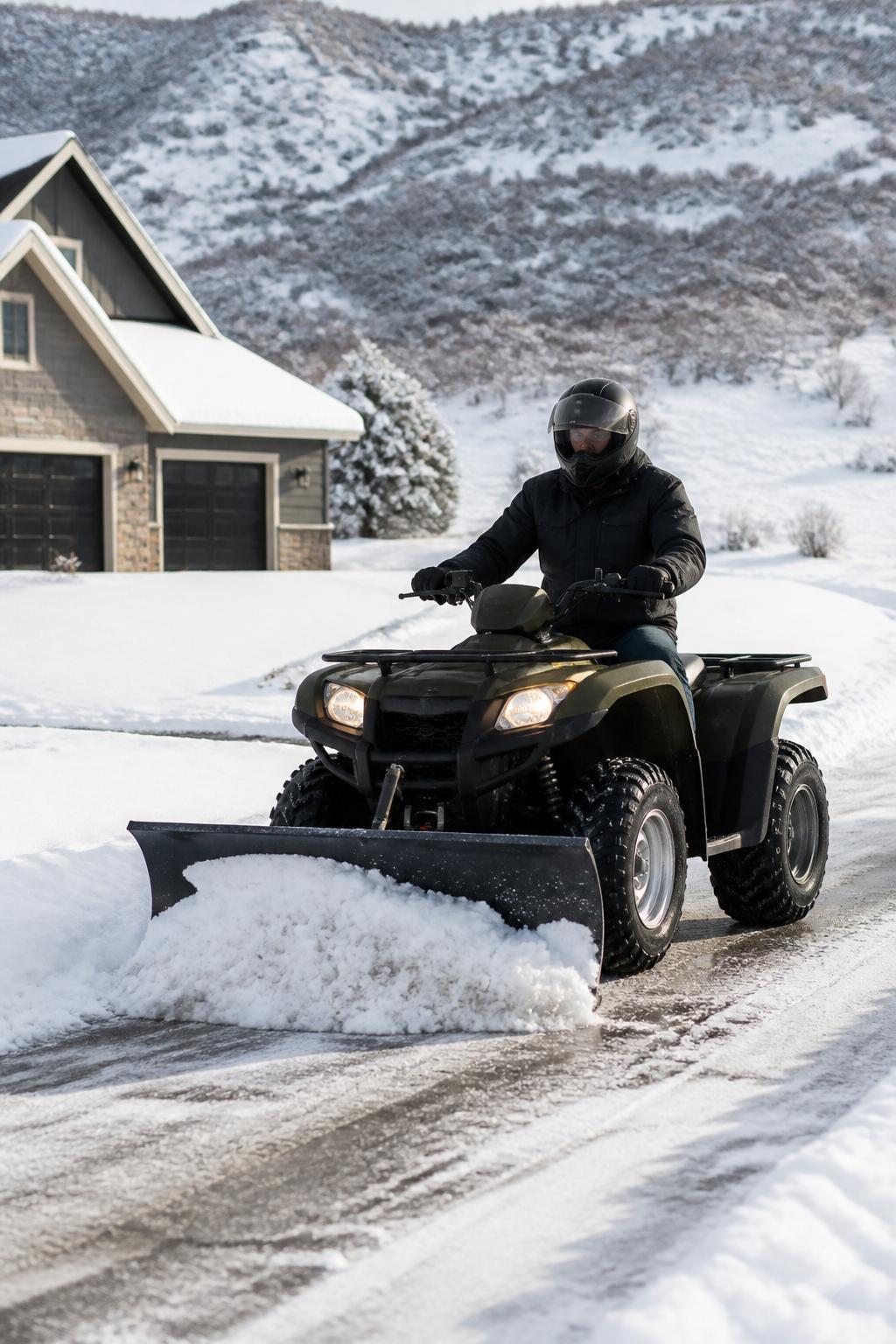
A complete ATV snow plow setup has three parts: a mount that bolts to the frame, a blade that pushes snow, and a lift system, usually a winch, that raises and lowers the blade. Buy these as a matched kit for your specific model so the mount lines up correctly.
Specialty Equipment Market Association member resources
Most competitors stop at "buy a kit." The part they skip is the compatibility check that keeps a plow from bending a frame or frying a winch. Run this checklist before you order anything:
- Mount type: Frame-mounted systems spread force across the machine and are the standard for serious plowing. Universal or bumper-style mounts are cheaper but concentrate stress and can flex the frame under a heavy load.
- Model fitment: Match the mount to your ATV's exact year, make, and model. A mount built for a different generation of the same model often will not line up, and drilling or shimming to force a fit weakens the attachment.
- Frame and suspension: Check the owner's manual for any tongue-weight or front-load limit. A plow hangs weight and push force well ahead of the front axle, which is why manufacturers publish limits and why exceeding them is a common cause of bent frames and worn front suspension.
- Winch capacity: Size the winch above the blade's weight with margin to spare. A winch that is barely rated for the blade will strain and stall when the blade is packed with wet snow.
- Electrical system: An electric winch draws significant current. Confirm your ATV's charging system and battery can support it, and consider a winch rated for continuous duty if you plow long driveways.
Choosing the Right Plow Blade and Mount
Blade width should roughly match your ATV's track, usually 48 to 60 inches for a mid-size machine. A blade much wider than the vehicle pushes snow the engine and tires cannot handle.
Straight blades are simple and cheap. Angled or adjustable blades let you push snow to one side, which speeds up clearing. Steel blades are heavy and durable; poly blades slide over pavement and resist sticking.
Do You Need a Winch to Plow Snow with an ATV?
A winch is the most common way to lift and lower a plow, and most plow kits are built around one. Manual lift systems exist but wear out your arm fast in cold weather.
Pick a winch rated above your blade's weight with room to spare. A synthetic rope is safer than steel cable in cold, icy conditions because it will not whip if it snaps.
Best ATV Size for Snow Plowing: Engine, Gearing, and Weight
The best ATV size for snow plowing is generally 400cc and up, with four-wheel drive and a low-range gear. Smaller machines can plow light snow, but they struggle with wet, heavy snow and long driveways.
Here is how engine size lines up with the job:
| Engine Size | Best For | Notes |
|---|---|---|
| Under 400cc | Light snow, short walks | Limited pushing power |
| 400-500cc | Average driveways | Good balance of size and cost |
| 500-700cc | Long or steep driveways | Handles wet, heavy snow |
| 700cc+ | Large lots, commercial | Most power, highest cost |
Weight helps too. A heavier ATV keeps the blade planted and pushes snow instead of sliding. But too much weight on soft ground can dig in.
Four-Wheel Drive, Tire Chains, and Traction Aids
Four-wheel drive is close to mandatory for plowing. Two-wheel drive spins out on packed snow and ice, leaving you stuck with a full blade. Engage 4x4 before you start pushing.
Tire chains and traction aids add grip on ice and steep driveways. Chains bite into packed snow, while studded or aggressive tires help on hard-packed surfaces.
- Tire chains: Best for ice and steep grades; remove on bare pavement.
- Aggressive tires: Good all-around grip without chain hassle.
- Ballast weight: Adds rear traction but watch your payload limit.
How to Plow Snow with an ATV: Step-by-Step Procedure
Plowing with an ATV takes a clear routine: set up the machine, plan your passes, and push snow in stages rather than all at once. Rushing or taking too big a bite is what damages machines and driveways.
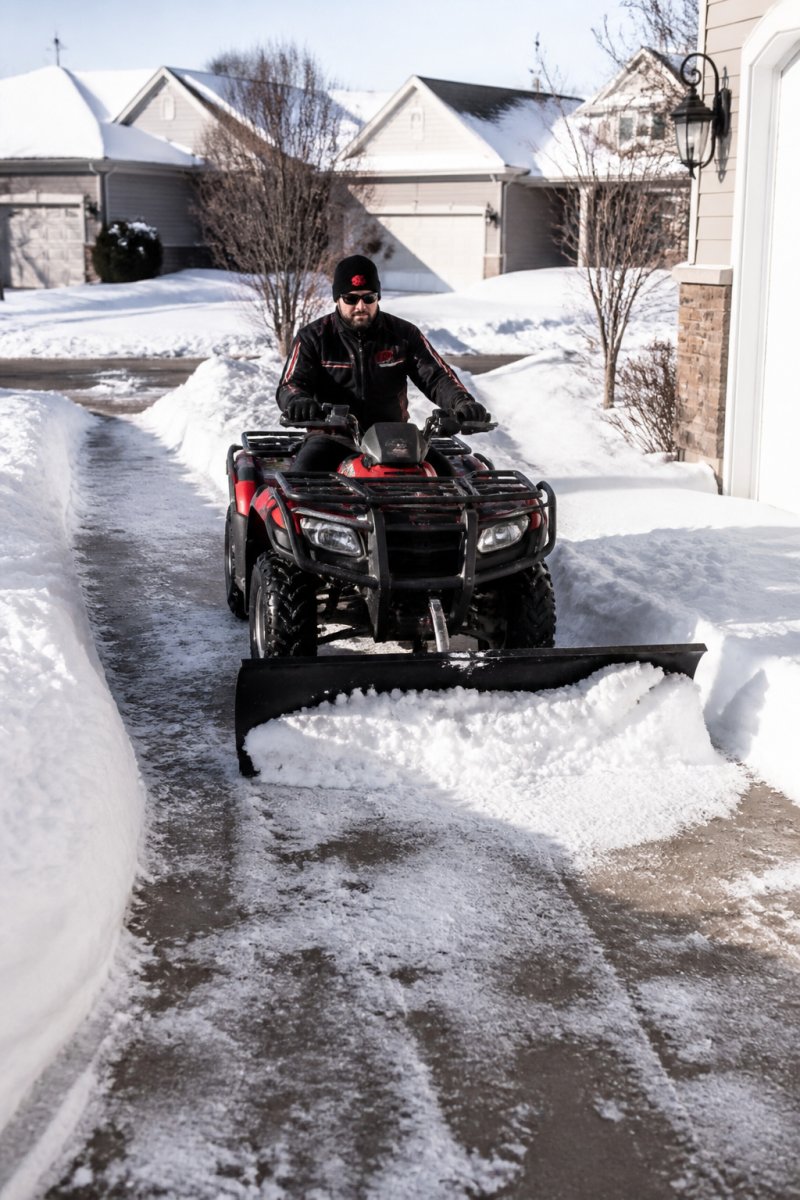
Follow these steps:
- Warm up the ATV and engage four-wheel drive and low range.
- Lower the blade and set your angle toward the snow bank.
- Push in a straight line, taking half-blade bites on deep snow.
- Lift and back up, then overlap each pass by a few inches.
- Clear the edges last and pile snow downwind.
- Raise the blade and park on a dry surface when done.
Expected result: A cleared driveway with snow banked to one side, without stalling or straining the machine.
Snow Depth, Snow Type, and Driveway Size Guide
How you plow depends on the snow and the space. Use this guide to set your approach:
| Condition | Approach |
|---|---|
| Light, dry snow | Full-width passes, faster speed |
| Wet, heavy snow | Half-blade bites, low range |
| Deep snow (over 8 inches) | Push in layers, start at the edges |
| Packed or icy snow | Chains or aggressive tires, slow and steady |
| Steep driveway | Plow downhill, small loads |
For a long driveway, push snow to the sides in sections instead of trying to move it all to the end.
ATV Plow vs Snow Blower: Which Clears Your Driveway Better?
An ATV plow wins for speed and large areas, while a snow thrower wins for tight spaces and throwing snow far from the edge. A plow pushes snow into banks; a snow blower lifts and throws it, which helps when banks get tall.
Pick a plow if you have a big area and a capable ATV. Pick a snow blower if your driveway is small, your banks are tight, or you do not own an ATV.
Safety Limits, Machine Damage Prevention, and Cold-Weather Maintenance
Respecting limits protects both you and the machine. Plowing puts real stress on the frame, drivetrain, and winch, so ease into heavy work and stop when something strains.
Rollover, Collision, and Visibility Risks
An ATV with a plow is front-heavy and can tip on slopes, so treat every pass as a stability decision:
- Rollover risk: Plowing across a slope, or pushing into a tall bank at an angle, shifts weight and can tip the machine. Plow straight up or down a slope rather than across it, and keep the blade low to the ground.
- Collision risk: Hidden obstacles, curbs, steps, garden edging, toys, and mailboxes, bend blades and can throw the machine. Walk the driveway before the first storm and mark anything you cannot see under snow.
- Visibility: Snow dust, fogged goggles, and low winter light cut sightlines. Clear your path of people and pets, and never plow toward someone who cannot see or hear you coming.
- Safe speed: Plowing is a low-speed job. High range and wide-open throttle burn clutches and overheat transmissions; low range and a steady pace keep the machine in control.
- Backing up: Most ATV plow injuries happen while reversing. Look over both shoulders, keep the blade raised, and know what is behind you before you move.
Common mistakes to avoid:
- Hitting hidden obstacles like curbs or steps and bending the blade.
- Pushing wet snow too fast and overheating the transmission.
- Running wide-open in high range, which burns the clutch.
- Letting snow pile up before clearing, forcing oversized loads.
Cold-Weather Preparation and Maintenance
Cold-weather prep matters. Check tire pressure, top off fluids, and keep the battery charged, since cold saps power. Grease the plow pivot points and inspect the winch rope for wear before the season starts.
- Battery: Cold reduces cranking power. Keep it on a maintainer between storms and replace a weak battery before the season, not during it.
- Fluids and warm-up: Let the machine warm up before loading it, and check oil and coolant levels per the owner's manual.
- Tire pressure: Cold drops pressure, which affects traction and blade contact. Check and adjust before each storm.
- Post-use cleaning: After each storm, clear snow off the machine and let it dry to prevent rust. Rinse road salt off metal parts.
- Storage: Store the plow blade off the ground so it does not freeze to the surface, and inspect the mount and winch before the next storm.
Consumer Product Safety Commission off-highway vehicle safety guidance
Conclusion
Plowing snow with an ATV comes down to matching the machine to the job. Four-wheel drive, low-range gearing, enough weight, and a properly mounted plow turn an ATV into a capable snow removal tool for most driveways. Respect the snow depth, watch your payload, and keep up with cold-weather maintenance to avoid damage. If you are still deciding which machine fits your driveway, check us out @ Monarch Honda.
Frequently Asked Questions
How much snow can you plow with an ATV?
Most ATVs with a properly sized plow handle 6 to 12 inches of fresh snow in a single pass. Wet or packed snow is heavier, so you may need to take narrower passes or make multiple trips. For drifts deeper than 12 inches, push the top layer first, then work down in stages. A 4x4 ATV with low range and tire chains manages deeper snow far better than a two-wheel-drive machine.
What size ATV is good for plowing snow?
For regular driveway plowing, a 400cc to 700cc ATV with four-wheel drive and a low-range gear is a solid choice. Smaller machines around 250cc to 350cc can handle light, dry snow on short, flat driveways but struggle with heavy or wet snow. Larger engines above 700cc give you more torque for steep driveways and deep snow banks. Weight matters too: heavier ATVs push snow with less wheel spin.
Do you need a winch to plow snow with an ATV?
Most ATV plow setups use a winch to raise and lower the blade, though some mounts use a manual lever instead. A winch makes it easier to adjust blade height from the seat and is the standard setup for most plow systems. If your ATV does not have a winch, check whether your chosen plow mount supports a manual lift before buying. Winch capacity should match or exceed your plow system's requirements.
Can an ATV plow wet or heavy snow?
Yes, but with limits. Wet snow weighs significantly more than dry powder, so an ATV will need to take smaller bites and may lose traction more easily. Use low range, keep the blade angle shallow, and avoid overloading the machine. Tire chains or aggressive tread patterns help maintain grip. If wet snow is deeper than 8 to 10 inches, plan on multiple passes rather than trying to clear it all at once.