 how-to
How to Winterize a UTV for Utah Winters
Last Updated: November 3, 2026
Quick Summary
To winterize a UTV for Utah winters, wash off salt and mud, change the engine oil, add fuel stabilizer to a nearly full tank, fog the engine for long storage, and put the battery on a tender. Do this before the first hard freeze, which in Northern Utah typically arrives around October 22.
- The first hard freeze in Northern Utah typically arrives around October 22, when overnight temperatures hit 32°F.
- Change old engine oil before storage because it carries acids and moisture.
- Add fuel stabilizer to a nearly full tank, which leaves less room for condensation.
- Skip engine fogging if the machine will run regularly through winter.
- Plug the exhaust and intake with steel wool, not rags, because rodents pull rags out.
Table of Contents
- How Utah Winters Affect Your UTV (and Why Timing Matters)
- Step 1: Wash, Dry, and Inspect Your UTV
- Step 2: Change Engine Oil and Check All Fluids
- Step 3: Choose the Best Fuel Stabilizer for UTV Storage
- Step 4: UTV Engine Fogging Procedure for Long Storage
- Step 5: UTV Battery Maintenance Winter Storage Guide
- Step 6: Lubricate, Protect Tires, and Prep for Utah Storage and Pest Prevention
- Step 7: Spring Recommissioning Checklist for Your UTV
- Frequently Asked Questions
How Utah Winters Affect Your UTV (and Why Timing Matters)
The first hard freeze in Northern Utah typically arrives around October 22, when overnight temperatures hit 32°F, according to Malone Ad's Powersports winterizing timeline. Miss that window and a UTV can sit through months of freezing nights with untreated fuel and a weak battery. This guide from Monarch Honda walks through how to winterize a UTV for Utah winters, step by step, so spring startup is boring instead of expensive.
Winterizing a UTV is the process of cleaning, servicing, and protecting a side-by-side so it sits safely through cold months without corrosion, stale fuel, or a dead battery. Utah adds its own twist: road salt on late-season rides, dry canyon dust, and temperature swings that thaw and refreeze. Riders who plow snow or run winter trails need a different routine than owners parking a machine until April.
Below, the seven steps cover both cases.
If the machine could earn its keep this winter, plowing snow with an ATV or UTV is worth reading before storage season starts.
Step 1: Wash, Dry, and Inspect Your UTV
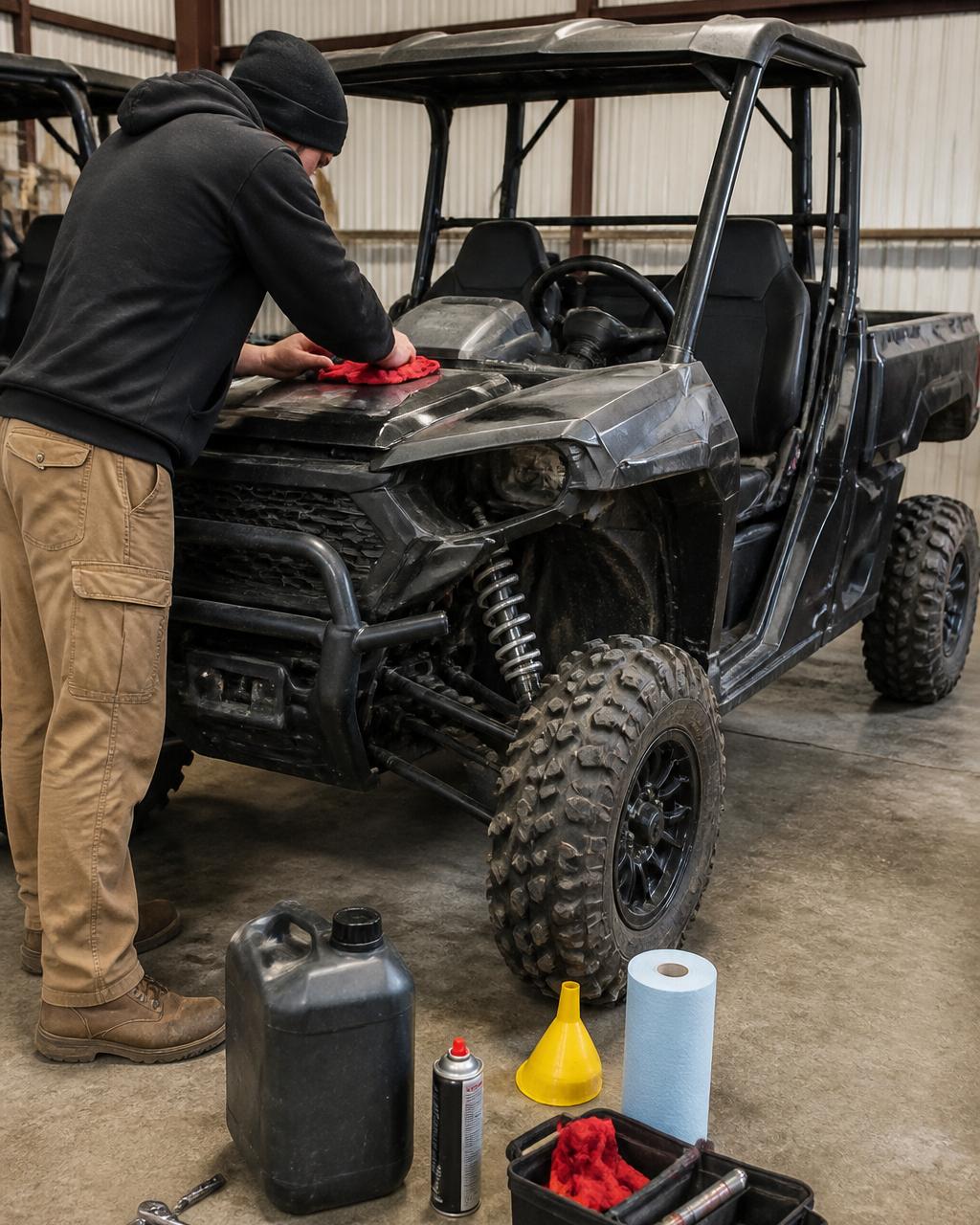
Start with a full wash, because mud and road salt left on metal over winter eat into paint and fittings. Fastback Moto's winter storage guidance stresses washing off salt and dirt from late-season rides before storage.
- Rinse the underside, wheel wells, and skid plates
- Use a soft brush on plastic panels and fenders
- Pay attention to the airbox area and around the exhaust
- Dry everything with towels or a leaf blower, then let it air out
Watch out: trapping water in the airbox or under the seat invites rust and mildew. Dry thoroughly before anything gets covered.
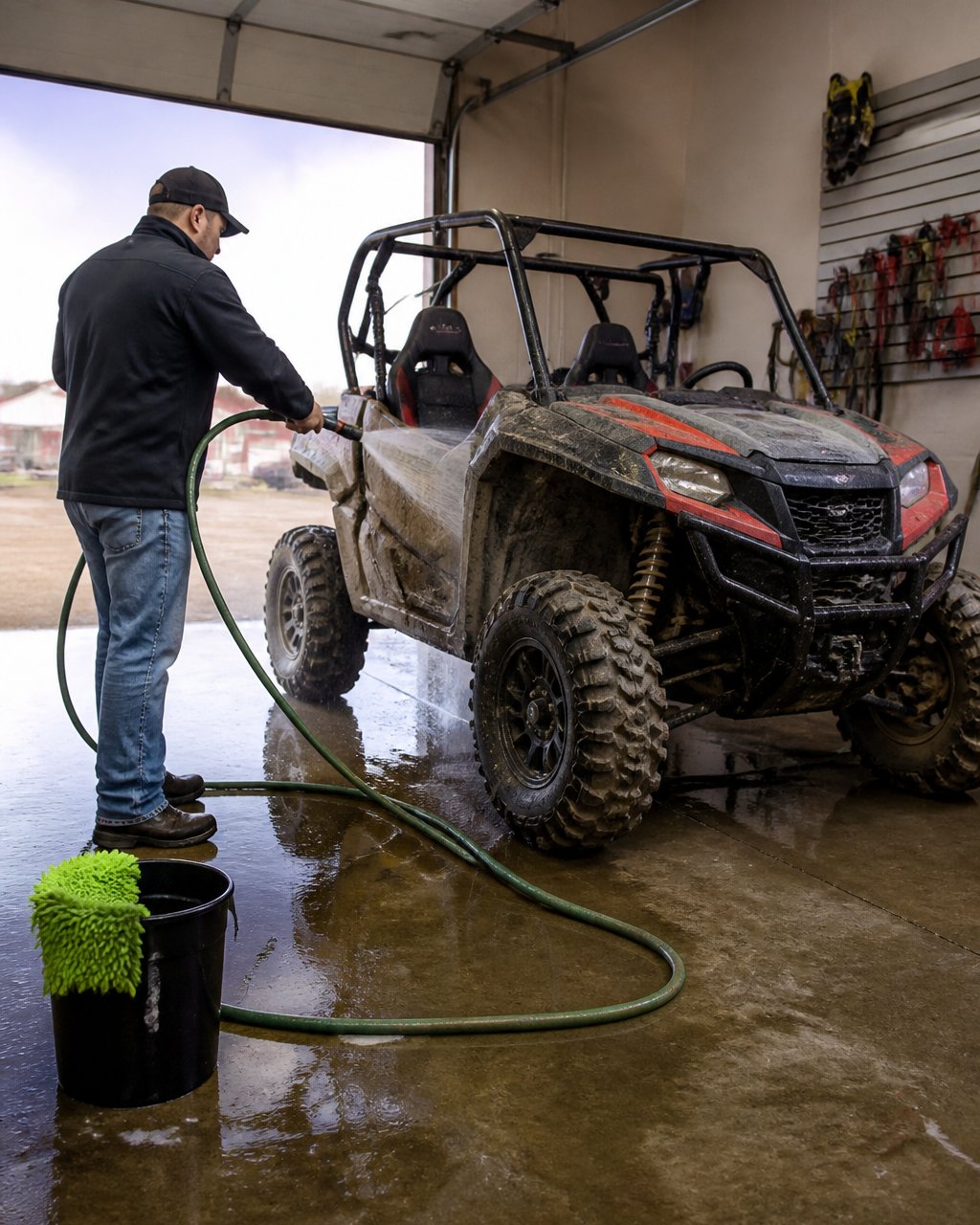
While drying, look for loose bolts, cracked boots, and worn belts. Fixing small issues now beats finding them in spring.
Step 2: Change Engine Oil and Check All Fluids
Old engine oil carries acids and moisture, so change it before storage, not after. Check the owner's manual for the right oil weight and capacity for the model.
Fluids to check:
- Engine oil and filter
- Coolant level and strength with a tester
- Brake fluid
- Differential and gear case oil
Top off coolant with the mix the manual specifies. A weak mix can freeze and crack components. For long storage, many owners also change the differential fluid. Model-specific guidance matters here, so the owner's manual is the final word.
Step 3: Choose the Best Fuel Stabilizer for UTV Storage
The best fuel stabilizer for UTV storage is one matched to the fuel type and mixed at the label ratio into a nearly full tank. A full tank leaves less room for condensation.
Owners debate two approaches. Some add stabilizer and run the engine briefly so treated fuel reaches the injectors. Others run the system dry. rider discussion on r/ATV shows both camps, and the manual settles it for the specific model.
- Add stabilizer to fresh fuel
- Run the engine a few minutes to circulate it
- Cap the tank and note the date
Step 4: UTV Engine Fogging Procedure for Long Storage
The UTV engine fogging procedure protects cylinder walls from rust during months of sitting. Fogging oil is sprayed into the intake while the engine turns over, coating internal parts.
- Remove the air filter and locate the intake
- Start the engine and let it warm briefly
- Spray fogging oil into the intake in short bursts
- Shut the engine off as it begins to stall
- Reinstall the air filter or a fresh one
Skip fogging if the machine will run regularly through winter. It is a long-storage step, not a weekly one.
Step 5: UTV Battery Maintenance Winter Storage Guide
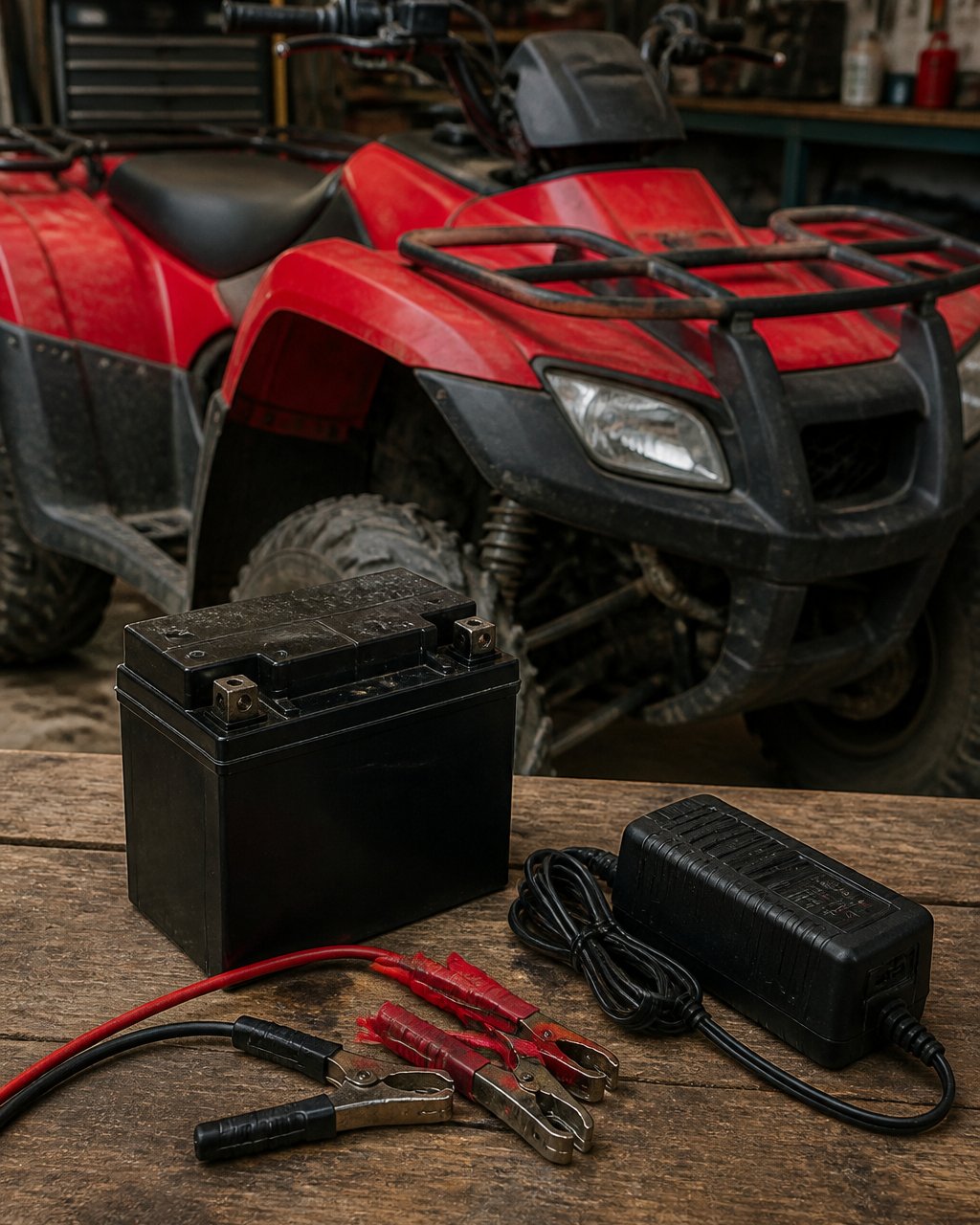
This UTV battery maintenance winter storage step decides whether spring starts with a turn of the key or a jump pack. Cold slows the chemical reaction inside a lead-acid battery, so a battery that cranks fine in July can fail on the first 20°F morning. Ravek's storage recommendations suggest removing the battery for indoor storage or using a trickle charger through the cold months, and both approaches work if you test first.
Start by checking state of charge with a voltmeter after the machine has sat for a few hours. A battery that is weak enough to struggle in cold weather should be load-tested before storage to determine whether it is worth tender care or should be replaced.
- Pull the battery and store it indoors above freezing, or leave it in the machine on a smart tender
- Clean terminals with a wire brush and coat them with dielectric grease
- Check the electrolyte level on serviceable batteries and top off with distilled water only
- Keep the charger off concrete in a dry spot and verify the tender is temperature-compensated
- Check voltage monthly; a tender that stops working is worse than no tender because it hides a dying battery
If you keep riding through winter, plowing, ice fishing, or running groomed trails, the routine changes. Keep the battery in the machine, park it on a tender between rides, and accept that cold cranking amps drop with temperature. A battery blanket or a warm garage bay helps on single-digit mornings. Watch out: a battery that is only partly charged can be more vulnerable in cold weather, so charge it before the first hard freeze, not after.
Model matters here. Some side-by-sides have a second accessory battery or a lithium option, and lithium batteries have different storage voltage and charging rules than lead-acid. Check the owner's manual for the specific battery type and whether the manufacturer recommends removal, tender use, or a storage charge level. A tender costs less than a replacement, but only if it matches the battery chemistry.
Step 6: Lubricate, Protect Tires, and Prep for Utah Storage and Pest Prevention
Lubrication and pest control are the steps most owners skip. Grease chains, cables, and pivot points so they do not seize, and work grease into the fittings until fresh grease pushes out the old. Spray a silicone or dry-film lubricant on cables and linkages rather than sticky grease that collects dust. Then set tire pressure to the manual spec and block the machine off the ground if possible to avoid flat spots; if you cannot block it, inflate tires a few pounds above trail pressure and roll the machine a quarter turn once a month.
Utah storage and pest prevention matters more than most guides admit. Mice nest in airboxes and chew wiring, and a shed or garage in a rural area is an open invitation. The practical setup:
- Plug the exhaust and intake with steel wool, not rags, because rodents pull rags out
- Store in a shed or garage, not under a loose tarp that traps moisture against the paint
- Use a breathable cover so condensation can escape
- Set traps or bait stations around the machine, not inside it
- Pull the seat and check the airbox and under-seat cavities before and after storage
Where you store the machine changes the routine. A heated garage keeps temperatures stable but can be humid if you park a wet machine inside; a cold shed swings with the weather and invites condensation on cold metal. Outdoor storage under a breathable cover is workable if the machine sits on gravel or a pallet rather than bare ground, and if you check it monthly for nests and moisture. In dry canyon country, dust works into seals and cables over winter, so a light coat of lubricant on exposed linkages pays off. In damper valley storage, mildew and rust are the bigger threats, and ventilation matters more than a tight cover.
Watch out: a tarp tied down tight over a UTV can trap moisture against the machine. Breathable fabric or a vented cover is generally the better choice.
Before you close the door, walk the machine once more: grease points done, tires set, exhaust and intake plugged, battery on a tender, and a reminder on the calendar to check it monthly. That monthly walk-through is what separates a machine that starts in April from one that needs a tow.
Step 7: Spring Recommissioning Checklist for Your UTV
Spring recommissioning is the reverse of storage, and a checklist keeps it quick.
- Reinstall and charge the battery
- Drain or top off fuel and check for leaks
- Change the oil if it sat all winter
- Inspect the air filter and airbox for nests
- Check tire pressure and torque lug nuts
- Test brakes, lights, and coolant level
- Run a slow first ride close to home
Before that first trail day, UTV trail riding gear essentials covers what to pack for the season.
| Step | Time Needed | How Often |
|---|---|---|
| Wash, dry, inspect | 1-2 hours | Once, before storage |
| Oil and fluid check | 30-60 minutes | Once, before storage |
| Fuel stabilizer | 10 minutes | Once, before storage |
| Engine fogging | 15 minutes | Long storage only |
| Battery care | 15 minutes | Once, then check monthly |
| Lube, tires, pest prep | 30 minutes | Once, before storage |
| Spring recommissioning | 1-2 hours | Once, at season start |
Timing is the whole game with Utah winters. Get the machine clean, fueled, and protected before the first hard freeze, and spring becomes a checklist instead of a repair bill. Monarch Honda's service department can help with any step that needs a lift or a torque wrench, and the owner's manual remains the final guide for model-specific fluids and fuel. Store it dry, store it covered, and check on it once a month.
Frequently Asked Questions
Does a side-by-side need to be winterized if it sits for months?
Yes. A side-by-side that sits for months still needs winterization to prevent fuel system gumming, battery drain, and corrosion. Even in a sheltered garage, cold temperatures and moisture can damage internal engine parts. Follow the same steps you would for a UTV you plan to store all winter: stabilize the fuel, remove or maintain the battery, fog the engine, and protect tires from flat spots. Skipping these steps often leads to a no-start or costly repairs in spring.
How do I prevent battery drain in my UTV during winter storage?
For UTV battery maintenance winter, remove the battery and store it indoors in a cool, dry place, or leave it in the vehicle connected to a battery tender. A tender maintains a full charge without overcharging, which prevents sulfation. Clean the terminals with a wire brush and apply a dielectric grease to stop corrosion. Check the charge monthly if you are not using a tender.
Should I change the oil before storing my UTV for the winter?
Yes, change the engine oil and filter before storage. Used oil contains acids and moisture that can corrode internal engine components over the winter. Fresh oil provides a clean protective layer. Also check the coolant strength with a hydrometer to ensure it protects against freezing, and top off the differential and transmission fluids per your owner's manual. This step is especially important in Utah, where temperatures regularly drop below freezing.
How do I protect my UTV tires from flat spots during winter?
Inflate tires to the recommended pressure and park the UTV on a flat, hard surface. If possible, lift the vehicle on jack stands to take weight off the tires. Otherwise, move the UTV a few inches every few weeks to change the contact patch. Avoid parking on dirt or gravel, which can wick moisture. Cover the tires to block sunlight, and check pressure monthly. Flat spots from long storage often cause vibration that does not smooth out.